SIGSAC China
SIGSAC China 日程
| 时间 | 内容/报告题目 | 讲者 | 主持人 |
|---|---|---|---|
| 13:30-13:35 | 开场 | 秦湛 浙江大学 | 秦湛 浙江大学 |
| 13:35-14:05 | 主动网络安全模型及应用 | 张小松 电子科技大学 | |
| 14:05-14:35 | When AI Meets Code: Toward Trustworthy Systems Security | Lorenzo Cavallaro University College London | |
| 14:35-15:05 | The Privacy Paradox: Reconciling Anonymity and Regulation in Digital Currencies | Man Ho Allen Au The Hong Kong Polytechnic University | |
| 15:05-15:35 | 边界的消解:反思互联网安全设计原则在AI Agent时代的处境 | 段海新 清华大学 | |
| 15:35-16:05 | 基于反事实学习的安全强化学习交通信号控制方法 | 李丽香 北京邮电大学 | |
| 16:05-16:35 | 智能体对抗攻防与安全评测 | 刘祥龙 北京航空航天大学 | |
| 16:35-17:05 | AI智能体驱动的软件安全攻防研究 | 王帅 香港科技大学 |
特邀报告
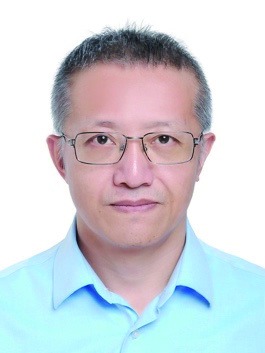
特邀报告: 主动网络安全模型及应用

张小松
电子科技大学
摘要:网络空间已成为国家主权的新疆域,网络安全事关国家安全与发展全局,是大国战略博弈的核心领域。攻防不对称是我国网络空间安全面临的核心困境,传统功能安全、信息安全与被动防御三大范式存在理念滞后、能力局限、成本失衡等短板,难以适配国家级对抗、AI自动化攻击、供应链渗透等新型威胁,本质上呈现防御体系被动、威胁管控乏力、核心技术受制的安全格局。主动网络安全模型以博弈论与智能计算为支撑,构建“智感、透析、活现、反制”四要素协同体系,为破解网络防御困境、实现从被动响应到主动对抗的战略转型开展了系统性探索与工程化攻关,形成的理论体系与技术成果,已在关键信息基础设施、卫星互联网、能源通信等领域落地应用。报告将围绕对抗现状与范式困境、理论模型与核心创新、技术体系与知识产权、应用场景与实践成效展开全面解析。
个人简介:张小松,电子科技大学信息与软件工程学院(示范性软件学院)院长国家级人才,教授,博士生导师,成都市科协副主席,中国计算机学会/中国通信学会/中国电子学会/中国指挥与控制学会会士。长期从事计算机系统与网络安全的研究与攻关,以第一完成人获得2019国家科技进步一等奖、2012国家科技进步二等奖,四次获得省部技术发明一等奖和科技进步一等奖,主持国家重点、重大课题40余项,以第一作者出版著作5部,发表SCI/EI收录学术论文249篇,荣获第六届“杰出工程师奖”、首届“全国科创名匠”、第二届“全国创新争先奖”、国家“网络安全优秀人才奖”等荣誉称号,牵头主持的网络安全的专用编程语言Yaklang创新及应用成果入选2023年度信息通信领域十大科技进展,获2025中国通信学会科技进步一等奖。
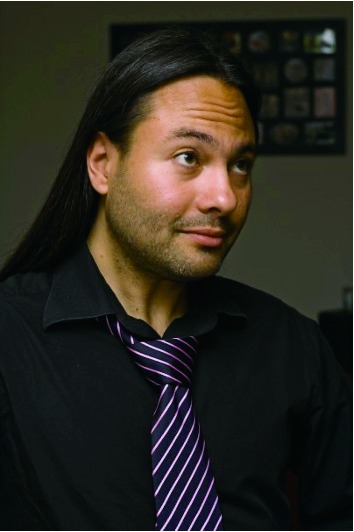
特邀报告: When AI Meets Code: Toward Trustworthy Systems Security
Lorenzo Cavallaro
University College London
摘要:Machine learning has delivered remarkable results across domains, including systems security, often reaching levels of performance that suggest problems are "solved." But are they? In this talk, I argue that performance alone can be misleading: models may succeed without truly understanding, relying on shortcuts that break under adversarial pressure and distribution shift. This tension becomes particularly evident in security, where attackers actively adapt and data is inherently non-stationary. I will show how current approaches can fail in realistic settings, and why these failures are not accidental but rooted in a deeper mismatch between statistical learning and the semantics of code. But, unlike images, programs are governed by formal semantics. This opens a unique opportunity: to move beyond surface-level correlations and toward representations that preserve properties of interest, enabling more robust, explainable, and trustworthy systems. I will touch on recent advances along this direction, including learning under code symmetries, temporal invariance, and grounding large models in program semantics. The goal is not simply to improve models, but to rethink the foundations of how we build AI for systems security, toward a principled science of trustworthy code reasoning.
个人简介:Lorenzo Cavallaro grew up on pizza, spaghetti, and Phrack, and soon developed a passion for underground and academic research. He is a Full Professor of Computer Science at University College London (UCL), where he leads the Systems Security Research Lab (S2Lab). His work is driven by a simple question: how do we make AI reason about code in a way we can trust? His research explores the foundations of trustworthy AI for systems security, focusing on semantics-grounded representations, program analysis, and uncertainty-aware reasoning in adversarial settings. The goal is not just to improve models, but to build a principled science of code reasoning. He publishes regularly at leading venues in computer security and machine learning and serves the community through program committees and editorial roles. He is also co-founder and Chief Scientific Officer of BynarIO, where these ideas are translated into practice to autonomously identify, prioritize, and repair vulnerabilities in real-world software, restoring trust and control over what we run. In addition to his love for food, he finds his Flow in science, music, and family.

特邀报告: The Privacy Paradox: Reconciling Anonymity and Regulation in Digital Currencies
Man Ho Allen Au
The Hong Kong Polytechnic University
摘要:As regulated digital currencies and institutional Decentralised Finance mature, blockchain systems face a persistent tension: protecting user privacy while enabling lawful oversight. This “Privacy Paradox” is often framed as a forced choice between bank-style surveillance and crypto-style opacity.This presentation argues that such a trade-off is unnecessary. By deploying modern cryptographic primitives such as Linkable Ring Signatures and Zero-Knowledge Proofs, it is possible to architect “privately accountable” systems that preserve anonymity while supporting targeted auditability.The discussion highlights three advancements: (1) a post-quantum linkable ring signature scheme that hardens digital identities against future quantum threats; (2) a scalable construction offering logarithmic signature size and rapid verification to mitigate blockchain bloat; and (3) lessons from Project Aurum 2.0, a retail CBDC prototype for the e-HKD pilot, which demonstrates ZKP-based anonymity within a regulatory sandbox. Together, these results provide a compliant, scalable, and privacy-preserving blueprint for the future of digital money.
个人简介:Dr Man Ho Allen Au is a Full Professor and Associate Head (Research and Development) at the Department of Computing of The Hong Kong Polytechnic University. Before that, he was an Associate Professor in the Department of Computer Science at the University of Hong Kong. Allen's research interests include Information Security, Applied Cryptography, Blockchain Technology, and their applications. He has been ranked as HKU Scholar in the Top 1% (by Clarivate Analytics in the top 1% worldwide by citations) in 2020 - 2022. He is also listed as the World's Top 2% Scientists by single-year impact and by career-long impact in the list published by Stanford University in Oct 2022. His research has generated significant social and economic impact. In the past 5 years, he as the principal investigator has attracted over HK$30M in research and high-level consultancy projects. He is currently an associate editor of IEEE Transactions on Dependable and Secure Computing, Journal of Information Security and Applications, and an editorial board member of Journal of Cryptologic Research.
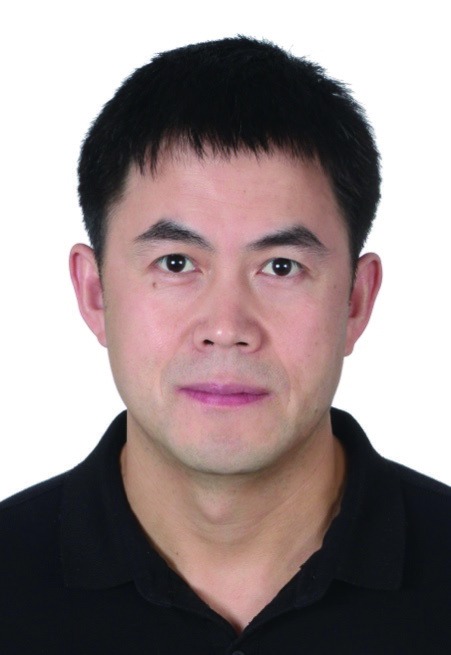
特邀报告: 边界的消解:反思互联网安全设计原则在 AI Agent 时代的处境
段海新
清华大学
摘要:看互联网过去四十年和AI Agent的安全,本质上是一部“不断划定边界、并在每一次跨界处进行核验”的历史:从端到端原则、Postel 鲁棒性原则,到完全仲裁与零信任,无不是在划清可信与不可信、端与中间的界限。本报告提出一个核心判断——大模型的革命性与危险性同源:它在自然语言层把指令与数据、可信与不可信统统压平,使建立在边界之上的整套安全机制随之动摇。这正是"边界的消解"。以 2026 年初多款主流 AI 工具集中爆发的同类高危漏洞为切入,报告指出这并非孤立缺陷,而是一种结构性的安全问题。报告进而将互联网早期经典的安全设计原则逐条映射到 Agent 时代,揭示它们的不同命运:有的裂解失效,有的被推向反面,有的反而比以往更为关键。报告最后回到图灵—冯·诺依曼“程序即数据”的计算原点:安全工程曾花数十年在指令与数据间重新筑墙,而大模型在自然语言这一更高的语义层再次推倒了它。如何在 Agent 层重建边界,正是这一代人要回答的问题。
个人简介:段海新博士,清华大学网络研究院教授、博士生导师,中关村国家实验室研究员,入选国家高层次人才计划,国务院学位委员会第八届学科评议组成员,中央网信办首届“网络安全优秀人才”奖获得者。带领团队发现了互联网基础协议的一系列重要安全漏洞,促使Google、苹果、微软等公司多次升级安全产品,促使IETF等国际标准化组织多次修改协议标准。在四大安全顶级学术会议和网络顶会发表论文80多篇,获国际顶级安全学术会议CCS、NDSS、USENIX Security 等多个最佳论文奖和互联网研究任务组(IRTF)应用研究奖。

特邀报告: 基于反事实学习的安全强化学习交通信号控制方法
李丽香
北京邮电大学
摘要:随着城市交通规模的不断扩大,交叉路口已成为交通事故和交通拥堵频发的关键区域。交通信号控制是提升道路安全性和通行效率的重要手段。近年来,基于强化学习的交通信号控制方法在降低车辆等待时间和缓解拥堵方面取得了一定进展,但多数方法更关注交通效率,对碰撞等安全事件的建模和解释能力仍然不足。针对这一问题,我们课题组提出了一种基于反事实学习的交通信号控制框架 CFLight。通过结构因果模型分析不同信号动作可能带来的后续交通结果,并尝试回答“当不安全事件发生时,如果回溯并采取其他动作,风险是否仍会发生”这一问题。在此基础上,CFLight 将反事实模块与强化学习交通信号控制模型相结合,在保持交通效率的同时减少潜在碰撞风险。最后,在真实和合成交通数据集上进行了实验,验证了所提方法在提升交叉路口交通安全性和整体通行性能方面的有效性。
个人简介:李丽香,北京邮电大学教授,博导,硕导。教育部国家重大人才工程特聘教授、教育部新世纪优秀人才,全国百篇优秀博士学位论文奖、中国密码学会首届优秀青年奖的获得者。主要研究方向为人工智能安全、混沌保密通信等。在PNAS、IEEE会刊、Nonlinear Dynamics、Chaos等国际著名期刊上发表SCI学术论文200余篇,ESI高被引论文5篇。获国家和省部级奖励5项,获4项国际会议或期刊最佳论文奖,获授权专利30余项。目前主持国家重点研发项目1项、国家自然科学基金联合基金重点项目1项。作为项目负责人已经主持完成了包括国家自然科学基金、国家重点研发项目课题等30余项国家/省部级科学研究项目的研究工作。目前是中国密码学会混沌保密通信专业委员会主任委员。
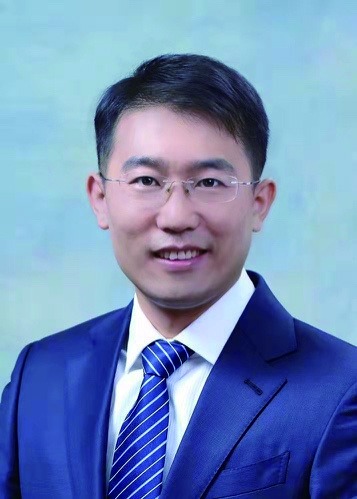
特邀报告: 智能体对抗攻防与安全评测
刘祥龙
北京航空航天大学
摘要:大模型、智能体、具身智能等人工智能模型及系统已成为国民经济和社会发展广泛依赖的关键信息基础设施。但近年来这类系统在实际应用中面临着对抗样本、后门攻击等安全挑战,暴露出大量的安全风险。加强人工智能安全治理已经成为国家战略,亟待探索明晰人工智能的安全边界,建立安全攻防技术体系、评测评估能力及演练监测系统。本报告将围绕上述目标,简要报告团队在小模型、大模型、智能体、具身智能等人工智能安全攻防和评测的研究成果,重点针对智能体在数字世界和物理世界的安全问题,介绍风险评估、防护加固及仿真演练等方面的探索和实践,以及人工智能安全技术发展思考。
个人简介:刘祥龙,北京航空航天大学计算机学院党委书记、教授、博士生导师,国家级领军人才,国家网信创新人才。现任复杂关键软件环境全国重点实验室副主任、国家人工智能标准化总体组治理专题组联合组长、中国仿真学会视觉计算与仿真专委会副主任。长期从事安全可信人工智能的教学和科研,负责《人工智能安全导论》、《数据结构与程序设计》等国家级课程,发表TPAMI、IJCV、NeurIPS、CVPR等人工智能领域国际顶级期刊/会议论文160余篇,主持国家自然科学基金青年A类和B类项目、科技创新2030重大项目、国家重点研发计划项目等国家级项目。担任IEEE TNNLS等期刊编委,ACL、AAAI等国际顶级会议领域主席。连续入选爱思唯尔中国高被引学者,获中国仿真学会科学技术一等奖、陕西省自然科学一等奖、中国电子学会青年科学家奖、北京市科技新星等奖励荣誉。
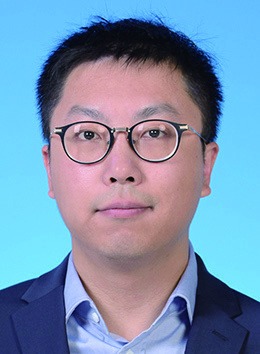
特邀报告: AI智能体驱动的软件安全攻防研究
王帅
香港科技大学
摘要:现代软件系统日益复杂,传统的安全攻防技术常面临误报率高、自动化程度受限等挑战 。大语言模型(LLM)的出现带来了新的机遇,但受限于模型本身的幻觉和推理深度,如何将其有效应用于复杂的安全任务仍是核心难题。本次讲座将介绍大模型智能体(LLM Agents)驱动的全栈式软件安全研究 。我们将探讨如何通过“深度思考”(Deep Thinking)机制增强开源模型的复杂逻辑推理能力,并结合外部工具与领域知识,构建高质量的安全垂域智能体。讲座将展示该方法论在多个关键场景的应用成果,包括漏洞挖掘与自动修复、二进制代码逆向与翻译,以及自动化CTF挑战求解 。
个人简介:王帅,香港科技大学计算机科学与工程系长聘副教授、博士生导师、研究生部主任。他于宾夕法尼亚州立大学获得博士学位,并曾在苏黎世联邦理工学院(ETH Zurich)担任博士后研究员 。王教授的研究兴趣广泛涵盖计算机安全与隐私,重点关注AI安全、软件安全等前沿领域 。他的研究成果发表在安全“四大”等顶级会议上 ,并多次获得杰出论文奖,包括 IEEE S&P 2025 杰出论文奖(AI系统安全)及 ACM SIGSOFT (ASE 2023) 杰出论文奖 。此外,他还获得了香港研究资助局杰出青年学者奖 (RGC Early Career Award 2020)、2025年香港ICT金融科技奖(隐私计算),以及Google、阿里巴巴达摩院、腾讯等工业界的研究学者奖。